Greece and The Macedonian Question Today
Everything you wanted to know about Macedonians and Greeks

Greece and the Macedonian Question Yesterday
Don't watch the History Channel, read this instead!

How To Find News on Macedonia.
See this article on Macedonian news sites.

Showing posts with label Alexander The Great. Show all posts

Monday, March 19, 2007

Hitlerite Propaganda and "The Name Issue"

Just before Hitler invaded Yugoslavia in WW2, newspapers in Germany were reporting that "Yugoslav warmongers" were planning to attack Germany. The Greek newspaper Kathimerini is not telling the truth. Greece, not Macedonia, wants sole possession of the Macedonian name. That is what this whole dispute is all about.

Macedonians like to share.

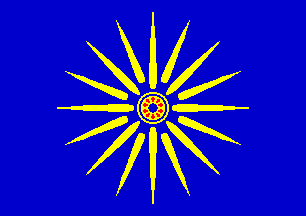
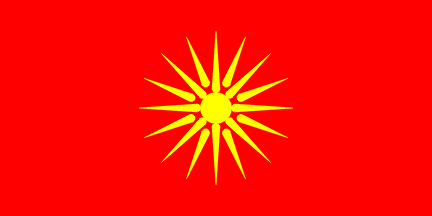
Keep your blue starburst flag, let up have the red starburst flag.
Keep your "province of Macedonia", let us keep the "Republic of Macedonia".
Keep your "University of Macedonia", let us keep " Alexander the Great Airport"


The Macedonian Ambassador to Washington should consider asking the US "Congressional Research Office" to investigative this claim. While they are at it, they can look at both Macedonian and Greek textbooks, and Macedonian and Greek minority rights policies.


Kathimerini: Skopje Government wants to present Macedonia as sole successor of Ancient Macedonia
Macedonian_News_Service : Message: Daily Bulletin:

Athens, March 13 (MIA) - After renaming the Skopje airport from Petrovec to Alexander the Great, the north-neighbouring Government has also 'mobilised' the archaeological artifacts in its possession, trying to present Macedonia at an international plan as primary, if not sole successor to the historical and cultural heritage of Ancient Macedonia, Athens-based Kathimerini writes.

- In the lobby of Macedonian Government's building, eight big statues from the Greek-Roman period are displayed, which are, according to unofficial statements by Skopje archaeologists, authentic and transferred from museums, Kathimerini reports.

The article's author writes that 'these activities are in line with the ideology by the ruling party, which is tightly connected with the nationalism of the past, since it has derived from the secession of the renowned VMRO-DPMNE'.

The author underlines that Macedonian Foreign Affairs Minister Antonio Milososki has recently dubbed the name dispute as two-party issue and states that no other organization than the UN may undertake the responsibility to review two-party issues."

Unity Regarding Name Issue

It looks like my concerns regarding the Macedonia issue was unfounded. My apologies to all concerned.

Macedonia confirms unity on name dispute with Greece
Makfax vesnik:

Skopje /16.03/ 14:49

Macedonian top officials reaffirmed their unity on the name dispute with Greece.

This was announced after today's coordinative meeting among President Branko Crvenkovski, Prime Minister Nikola Gruevski and Foreign Minister Antonio Miloshoski.

'...The sole position and strategy of the Republic of Macedonia on overcoming the name difference was reaffirmed, as one of the highest state's priorities and prerequisite for preserving the constitutional name of the country', says the joint press statement released after the meeting that was attended also by the Macedonian Special Envoy over this issue, Ambassador Nikola Dimitrov.

The announcement further says that the meeting was aimed at 'mutual briefing on the current developments and coordination on this issue of highest state interest'.

Crvenkovski-Gruevski meeting comes in a time of strained relations between Athens and Skopje, but also in time of tension in the dialogue between the Prime Minister and the President.

Yesterday, the Government sent to Greece a note of protest relating offending behavior of some of their soldiers towards Macedonia.

Previously, Greece raised objections over renaming of the Skopje Airport into Alexander the Great."

Friday, March 16, 2007

More Pressure on Name Issue

I am very leery of closed door meetings to arrive at a consensus and then have the "compromise" foisted on the unsuspecting public. A forum on TV with the leaders of the Macedonian Orthodox Church and leading professors and journalists should be held inform the public of the crucial negotiations that are taking place with the US/EU to get a unified consensus on what is to be done.

"President and premier to hold consultation over name dispute with Greece
Makfax vesnik:

Skopje /16/03/ 08:22

President Branko Crvenkovski and Prime Minister Nikola Gruevski are due to hold consultation today aimed at defining the future steps of Macedonia regarding the name dispute with Greece.

According to the announcements, Foreign Minister Antonio Miloshoski and the Macedonian negotiator Nikola Dimitrov will also attend the meeting.

Yesterday, the Government sent to Greece a note of protest relating offending behavior of some of their soldiers towards Macedonia.

Previously, Greece raised objections over renaming of the Skopje Airport into Alexander the Great.

Greece's media reported that the local parties are very likely to use the name dispute for propaganda purposes during the 2008 election campaign."

Thursday, March 15, 2007

ABC News Misses the Point

ABC News should go to Florina (Lerin) to interview ethnic Macedonians to ask how it feels living in a country with this type of atmosphere.Amelia Newcomb pick up the ball and get in the game for god's sake.

ABC News: Reporters on the Job:

' …And Writing the Later Drafts: For correspondent Nicole Itano, clashing views of history in the Balkans is not confined to the classroom (see story). The taxi driver she uses to get around Athens, for example, will order passengers to get out if they refer to the Former Yugoslav Republic of Macedonia (FYRM) as simply 'Macedonia.' The reason: Greeks say that the kingdom of Alexander the Great, known as Macedonia, was part of present-day Greece. 'Many Greeks are upset at what they see as an attempt by a Slavic country to appropriate his legacy for itself,' Nicole says.

During a Greek broadcast of a soccer match between England and Macedonia, Nicole says, the station superimposed the letters FYRM (pronounced 'feerim') to 'correct' the scoreboard's rendering of the teams: ENG vs. MAC. 'That's how touchy these issues are,' she says.

Amelia Newcomb
Deputy world editor"

Tuesday, March 13, 2007

Danforth Comes to the Rescue

Danforth is the name of a street in Toronto where Macedonians and Greeks live and sometimes go out to play "kick your ass" over a statue of Alexander the Great. It is also the name of Loring Danforth, a professor of anthropology at Bates college. The link below is from last summer, so Danforth has already completed his interviews and is now in the process of writing his book. Looking forward to reading it.

Bates College | Loring Danforth:

"In late August, Danforth travels to Toronto where he will conduct interviews with child refugees from the Greek Civil War. He has focused much of his scholarly attention on Greece, Macedonia and Australia. His award-winning book 'The Macedonian Conflict: Ethnic Nationalism in a Transnational World' (Princeton University Press, 1996) concerns the claims to and construction of Macedonian identity in Northern Greece and Australia. He is also the author of 'The Death Rituals of Rural Greece' and 'Firewalking and Religious Healing: The Anastenaria of Greece and the American Firewalking Movement,' both published by Princeton University Press."

Sunday, February 18, 2007

Patriot Games

This is an old story from our friend Fiachra about Colin Farrell's Alexander. I saw the movie. Not much of a story, just enough to make Macedonians and Greeks look foolish. Wouldn't be proper to mention the role of US/EU in this comedy. Wouldn't be prudent!. People are watching! Mum's the word.

Patriot games

Which people are the true descendants of the greatest military
commander in history? Fiachra Gibbons reports on how Oliver Stone's
epic Alexander is reigniting an ancient, bitter feud.

Friday November 19, 2004
The Guardian

The first western imperialist ... Colin Farrell as Alexander

"We will come and kill you in your beds, cut your throats, and wipe
you from the face of the earth ... if Alexander the Great were alive
today he would grind you gypsy dogs into the dust, dig your dead from
their graves and silence forever your filthy language that insults his
name ..."

Internet chatrooms have never been the most decorous of forums but
even in the free-for-all that is cyberspace, those dedicated to
discussing Oliver Stone's new film, Alexander, are a case apart.

Since the combative director of JFK chose to make his first foray into
historical epics with a biopic of the most fought-over figure of the
ancient world, rivers of blood have been spilt - figuratively at least
- in a propaganda battle between Greek and Macedonian nationalists
over who has the right to claim the all-conquering hero as their own.

This very modern ethnic turf war is being fought with tortuously
argued historical blogs about which Macedonia Alexander conquered the
known world for - a tiny new Balkan republic that has only recently
come to see itself as the keeper of his flame, or a province that was
officially known as "Northern Greece" until the former Yugoslav
republic of Macedonia declared itself independent and bagged the name.

But the real blood and guts of the battle, the part Alexander would
have so enjoyed, is in the chatrooms, where fanatical foot- soldiers
taunt each other with blood-curdling threats heavy with echoes of the
short but brutish Balkan wars that carved up ancient land between
Greece, Serbia and Bulgaria almost a century ago.

Stone has remained uncharacteristically silent, preferring to wrestle
on set with war elephants and his leading man, Colin Farrell. Even for
such a seasoned controversialist, this is a scrap to stand back from.

For the struggle over who have the right to call themselves
descendents of the greatest military commander in history, and the
first real western imperialist, is neither pretty nor edifying. In the
early 1990s, Greece nearly invaded the newborn Republic of Macedonia
for "stealing" Alexander's symbol, the Star of Vergina, for its flag,
as well as the White Tower in the Greek Macedonian capital of
Thessaloniki for its banknotes, something the millions of ordinary
Greeks who took to the streets saw as "blatant acts of aggression".

The flag and the banknotes were hastily withdrawn, but Greek pride was
far from restored. To the horror of its European partners, Athens
briefly contemplated carving up its defenceless northern neighbour
with the Serbian dictator Slobodan Milosevic. In the end, Greece
stepped back, choosing instead to blockade the tiny republic of barely
two million people in an attempt to strangle it at birth. Since then
millions have been spent on a war of attrition to claim the name - and
Alexander - back.

You cannot walk more than a few hundred metres in any town in northern
Greece without tripping over a new statue, bust or monument to
Alexander, who extended the Hellenic world as far as India in the
fourth century BC with such slaughter that even today in Iran and
central Asia his name is used to scare unruly children. You will find
the most pointed statue of all at the border with Macedonia at Niki -
named after the Greek god of victory - where a giant Alexander angrily
brandishes a javelin at the upstart state across the frontier.

All over Greek Macedonia, streets, schools and airports have been
hastily renamed, while archaeologists, having all but ignored ancient
Macedonia until relatively recently, are digging furiously for its
traces. The spectacular tomb of Alexander's father, Phillip, at
Vergina near Thessaloniki, and the city's revamped museum, hammer home
the kingdom's Greekness.

Still, passions had cooled somewhat after an unhappy compromise over
the name that burdened Skopje with the cumbersome temporary moniker of
the Former Yugoslav Republic of Macedonia, or "Fyrom" for short. Greek
investment also began to build bridges - until Stone and his army of
Hollywood stars appeared on the horizon to put nationalists on both
sides back on a hair-trigger.

It is into this fraught and febrile atmosphere that George W Bush has
now wandered. With the world waiting and wondering where the president
will start the next war, Bush chose as his first major foreign-policy
decision of his second term to recognise Fyrom by its "proper" name as
the Republic of Macedonia, prompting paroxysms of Greeks anger across
the globe and Athens to vow to block Macedonia's entry into the EU and
Nato.

Even before Bush's intervention, the very mention of the M-word in
Greek Macedonia risked a stern lecture on how it has been Greek since
antiquity. I nearly lost an ear to a particularly patriotic barber in
Thessaloniki last month when I mentioned that I had just arrived from
the "other Macedonia".

Those people are not Macedonian, he raged. "That is a Slav lie. We are
the real Macedonians. They are prostitutes and Gypsies and worse than
Albanians," he declared. His family, it turned out, were recent Greek
immigrants from Georgia who, he claimed, went "east with Alexander".
He liked to take his son on Sundays to the massive equestrian statue
of Alexander on the city's seafront promenade, where Greek
right-wingers gathered after Bush's bombshell to burn American and
Macedonian flags. "I tell him to be proud of his ancestors and how
lucky he is to have returned to the land of his forefathers."

But ask anyone four hours north in Skopje what Alexander was and they
will smile sheepishly and say, "Macedonian, of course!" And when
pressed about the obvious absurdity of a country that has a majority
Slavic population claiming a man who was born nearly 1,000 years
before the first Slav appeared in Macedonia, they answer, "Well, he
was certainly not Greek."

If the Macedonians were Greek, why did Alexander have to address his
troops in both Greek and ancient Macedonian, they argue. And every dog
can quote the Athenian orator Demosthenes' famous condemnation of
Alexander's father Philip as "not only no Greek, nor related to the
Greeks, but not even a barbarian from any place that can be named with
honour, but a pestilent knave from Macedonia, whence it was never yet
possible to buy a decent slave."

"No one is saying that Alexander spoke modern Macedonian, that is
ridiculous, but who is to say that there isn't something of him still
floating around in the genome," says Vojislav Sarakinski, a lecturer
in ancient history at the city's main Cyril and Methodius university.
It is easy to ridicule all this as archetypical Balkan lunacy until
you realise how much of the emotional heat of the dispute stems from
the insecurity of both countries about their borders, fears fully
justified by the region's recent history.

Stone has been well aware of these sensitivities from the start,
though initial Greek outrage at his film focused on Alexander's
omnivorous sexuality, in particular his fondness for eunuchs. His
film, he insists, is purely about the historical "man god", and so has
made no secret of showing Alexander's love for his friend Hephaestion.
There is, however, none of the lurid decadence promised from Baz
Luhrmann's planned film about Alexander, if it ever gets off the
blocks.

Evangelos Venizelos, the formidable former Greek culture minister and
a Macedonian, attempted to get Stone onside early on, offering him
Greek locations and the use of the army for battle scenes, but the
director demurred and instead diplomatically chose locations far away
from controversy in Morocco and Thailand. Confronted with angry MPs
unhappy with what they were hearing about Alexander's bisexuality,
Venizelos despaired, "What can I do? It's Hollywood."

Generally, though, most Greeks see the Stone film as a chance to
strike a blow against Skopje, given that it is based on the biography
by the Oxford academic Robin Lane Fox, whom both sides see as a
Hellenist.

None of the previous, deeply disappointing attempts to bring
Alexander's extraordinary life to the screen have had to walk the same
tightrope because, until Skopje broke away from Belgrade in 1991,
Alexander's origins were not in dispute. In fact he barely figured in
the old Yugoslav textbooks, and even in Greece he was something of a
forgotten figure - relegated to the second and third division of
Hellenic heroes behind Pericles, the great philosophers, and warriors
such as Leonidas. While the great Greek director Theo Angelopoulos
dealt obliquely with him in his film about a 19th-century Macedonian
brigand, Megalexandros, there has been no biopic in either country.

"Alexander lived long before nationalism and so is our common hero,"
says Vasil Tupurkovski, a former deputy president, who has written
four popular histories about him. "He would be laughing at us arguing
about him now."

Ah, but would he be laughing in Greek or Macedonian? Professor Nade
Proeva, the expert on ancient Macedonia in Skopje, thinks both.
"Alexander certainly spoke and wrote Greek, but then it was the lingua
franca of the time, like English is now. I speak French but that does
not make me French."

With such treacherous ground to negotiate, and amid thunderous
lobbying from both sides, Stone has chosen a remarkably adroit middle
course. His masterstroke has been to give Alexander and the men of the
Macedonian phalanxes Irish accents, while the Greeks speak clipped
English RP.

Macedonians of all complexions are content with this, each convinced
it favours their cause. So in another two millennia when people ponder
again the origins of the mysterious Macedonian who emerged from the
southern Balkans to rule the world at 25, they will turn their ears to
Colin Farrell's guttural brogue and conclude that he was in fact a
Dubliner.

· Alexander opens in the US next week and in the UK in January.

New Name for Macedonian Airport

I have never read a report from a Macedonian journalist in which a member of the US/EU diplomatic parade through Skopje is asked a question about ethnic rights for Macedonians in Greece. This is just another case in point. Mirceski is probably a nice guy, but the story misses the whole point of the Macedonian-Greek conflict .. that is human rights for Macedonians in Greece! If they exist, I wish someone could take the stories and quotes from these diplomats and put them on the web!


"Macedonian Airport Lifts Name Dispute to New Heights
BIRN:

18 01 2007 Decision to rename terminal after Alexander the Great marks new phase in tug of war with Athens.

By Vladimir Mirceski in Skopje (Balkan Insight, 18 Jan 07)

The UN mediator for resolving the dispute between Greece and Macedonia flew into trouble last weekend - literally - after touching down at an airport whose new name has brought the conflict to new heights.

Matthew Nimetz landed at Skopje airport just as the Macedonians were about to formally rename it after Alexander the Great, the 4th century BC warrior whom Greeks see as the epitome of classical Greek heroism.

Although the airport still bore the old name Airport Petrovec when he landed, as Nimetz drove towards the Macedonian parliament he could hardly miss the sight of new road signs to the airport proclaiming the name of the mighty conqueror whose empire stretched practically all the way to the Punjab.

Nimetz brought an angry message from Greek foreign minister Dora Bakoyannis, complaining that the move violated the Interim Agreement regulating relations between the two countries.

After a two-hour meeting in Skopje, Nimitz maintained the move was “not a major event here”, adding, however, that the issue was “between two neighboring countries and has to be dealt with great sensitivity”.

Wednesday, January 31, 2007

Greek Ambassador Trashes Macedonian to US Congress

The Greek Ambassador gets a chance to go to the US congress, but where is the equal time for Macedonia's Ambassador? Its very important that the Macedonian government protest this unfair treatment. I wonder why they are so reluctant to respond? What about Macedonians in Greece?


GREEK AMBASSADOR GIVES CAPITOL HILL BRIEFING OF WASHINGTON BALKAN POLICYMAKERS ON GREECE’S LEADERSHIP IN THE REGION
Hellenic News of America:

"His remarks focused extensively on the provocative and hostile propaganda of the Government of the Former Yugoslav Republic of Macedonia (FYROM). This included a power point presentation showing expansionist maps used in FYROM schools and by FYROM’s military academy, as well as television interviews which showed the use of the name of Alexander the Great for Skopje’s airport As part of irredentist and political propaganda."

Thursday, January 25, 2007

Greek View of Airport Dust-Up

Not a bad summary of the story from the Greek side.


FYROM denies hidden agenda:
ekathimerini.com

The Former Yugoslav Republic of Macedonia (FYROM) did not rename its main airport after Alexander the Great in order to provoke Athens but believes that the move could help resolve the dispute over the official name of Greece’s neighboring country, FYROM’s foreign minister told Sunday’s Kathimerini.

“There is no hidden agenda or intention to provoke the Greek government behind the decision to rename Petrovec Airport,” said Foreign Minister Antonio Milososki.

Last month’s renaming of the Skopje airport after Greece’s 4th century BC military hero led to criticism from Athens, which saw it as a blow to relations between the two countries.

“Bilateral relations with Greece are so stable, especially in the areas of trade, tourism and business investments, that the issue of the [airport’s] name cannot put these in any great danger,” the minister said.

Milososki added that the renaming “could provide a challenge... to reassess our attitude about what can be disputed and what cannot.”

FYROM’s foreign minister suggested looking at Alexander the Great through a “European prism” and seeing him as a figure who unites rather than divides countries.

Monday, September 04, 2006

Sacred Mysteries of Macedonia

This is an upscale "adventure travel"firm that is taking people to Macedonia. Anyone who has any non-Macedonian" friends, and who really want an adventure, direct them to this site. As an added bonus, this Richard Brangs adventure to Macedonia has really pissed off the Greeks!

Richard Bangs Adventures Presented by Yahoo!

Sacred Mysteries of Macedonia

This month we visit Macedonia, a country better known in legend than in fact. Historians know Alexander the Great came from this mountainous land north of Greece; Bible-school children learn that Paul made his first Christian converts here. But few know that Macedonia has endured through the ages, its cultural integrity intact. We'll unearth some of its ancient mysteries and share its modern-day pleasures.

As usual, the dispatches are written by Richard Bangs, one of today's leading travel writers. He has led first descents of 35 rivers around the globe, including the Yangtze in China and the Zambezi in southern Africa, and has published more than 500 magazine articles, over a dozen books, a score of documentaries and several videos and CD-ROMs. He founded the adventure travel company Sobek Expeditions in 1973, and since has traveled the world, taking a global audience with him.

Sean Connery Plays the Reincarnation of Alexander the Great

This is a good movie about the Kalash people in Pakistan who are said to be descendents of the army of Alexander the Great. Macedonians and Greeks are fighting an internet war ( No support for a Greek Origin of the Kalash) as to whether they are the descendents of Greeks or ethnic Macedonians ... good fun!

The Man Who Would Be King
Wikipedia, the free encyclopedia:

The Man Who Would Be King (1888) is a short story by Rudyard Kipling concerning two British ex-soldiers who set off from 19th century British India in search of adventure and end up as kings of Kafiristan (now part of Afghanistan). The story was inspired by the travels of American adventurer Josiah Harlan.

The story was first published in The Phantom Rickshaw and other Eerie Tales (Volume Five of the Indian Railway Library, published by Wheelers of Allahabad in 1888). It also appeared in Wee Willie Winkie and Other Stories in 1895, and in numerous later editions of that collection.

In 1975, it was adapted into a feature film by director John Huston, starring Sean Connery as Daniel Dravot, Michael Caine as Peachey Carnehan, and Christopher Plummer as Rudyard Kipling (giving a name to the story's anonymous narrator). The doomed Billy Fish is played by Saeed Jaffrey."

Monday, July 11, 2005

Philip II of Macedon is Still resting in Peace

For those of you who are interested in these issues, it had been thought that the tomb of Philip II, also known as the father of Alexander the Great, was discovered. It turns out they we wrong.

Not Philip II of Macedon

Tuesday, November 30, 2004

US State - Press Briefing for November 30

More on US State Department response to Greek journalist on the Macedonian recognition issue. It is lucky that there are no Macedonian journalists at this press conference to make a fool of themselves. That God for small favours.

Daily Press Briefing for November 30 -- Transcript

QUESTION: On FYROM. Mr. Boucher, 70 members of the House of Representatives characterize as counterproductive your policy recognition of FYROM as "Republic of Macedonia" in a letter to the Secretary of State Colin Powell, November 19th. They write in inter alia, "This is more than an issue of a name for the Greek people. As you recall, Mr. Secretary, over 50,000 Greek-Americans attended in May 31st, 1992, memorial service in Washington, for the 40,000 Greek citizens who lost their lives at the hands of people living in what is today FYROM. When the lives were lost, our Secretary of State Edward Stettinius called, ‘talk of Macedonian nations as justified demagoguery representing no ethnic nor political reality,’ ‘and a cloak for aggressive intention against Greece.’"


Similar letter was sent to Secretary of State by 11 senators. How do you respond to that?


MR. BOUCHER: I don't know if we've responded to that specific letter. I think the overall situation, with regards to Macedonia, was explained here many times. As I noted at the time of our announcement, we had consulted with various members of Congress about it and we knew there were differing views on the Hill, and we're always happy to hear from people.


I would note that the decision to call the Republic of Macedonia by that name is not, in any way, a political or historical gesture, or a gesture related to history, nor are we turning our backs on the people who -- nor are we turning our backs on the many people who died in the second World War in this area. It was merely a question of what we thought we should call the nation at this point.


QUESTION: Mr. Boucher, I noted yesterday that you have an advocate or defender in the Voice of America, namely, George Bistis, the director of the Greek program, who attacked me personally in his dispatch all over the world, based on the way you and I conducted yesterday's dialogue on FYROM.


MR. BOUCHER: They attacked you?


QUESTION: Yes.


MR. BOUCHER: Really?


(Laughter.)


QUESTION: George Bistis, correct. It's a free dispatch. In a way, however, that only using the VOA facilities as a propaganda machine, but also as a tool to intimidate me, to disgrace me and to threaten me with the usual motives against the freedom of the press and the right to speak free, keeping in mind, Mr. Boucher, that your greatest president, Thomas Jefferson, said once upon a time, "I prefer a free press than a government." I would like you to comment on that.


(Laughter.)


MR. BOUCHER: Number one, we agree with Thomas Jefferson. Number two --


QUESTION: Excuse me? Number one, what?


MR. BOUCHER: We agree with Thomas Jefferson.


QUESTION: Definitely.


MR. BOUCHER: The Secretary of State -- we got the gist.


QUESTION: That's why I quote him.


MR. BOUCHER: We got the gist.


QUESTION: Number two (inaudible).


MR. BOUCHER: Okay. Number two is, as you know, I've never criticized the questions that are asked here in the briefing room. I think you all come and you have the right to ask whatever you want. I've always said there are no bad questions, there are just bad answers. So I'll stop at that one. I think that's good enough.


QUESTION: Any answer to my pending questions why your November Background Note on FYROM -- I asked you yesterday -- the authors wrote, "Alexander III ("the Great")? Is there any explanation for that because --


MR. BOUCHER: I don't think I have offered to get you an answer on that one, I'm afraid. That was sort of a level of grammar that I wasn't going to research any further.


QUESTION: Last night you released the following: "The U.S. supports Macedonia's current borders," which means -- and it will speak today. What about in the future borders after a month or a year or three years?


MR. BOUCHER: No, we support Macedonia as it is now within its current borders and we don't -- we're not pressing or encouraging or asking for any change in those borders.


QUESTION: As of today?


MR. BOUCHER: No, for now that is our policy, that our policy for now and in the future is to support Macedonia with its current borders, not to seek any change or forecast any change in those borders.


QUESTION: But taking the example of what happened to Kosovo, you were saying exactly the same when the Albanians moving day by day after the point that they’re ready in May 2005 to create an independent Kosovo. So that's why I'm asking you, this policy will be forever or just as we are speaking as of today?


MR. BOUCHER: This is our policy.


QUESTION: Yes.


MR. BOUCHER: This is our policy, period. Policies aren't dated. That's our policy and that's the way we see the situation with Macedonia, for now and for the future.


QUESTION: In the state --


MR. BOUCHER: Let's --


QUESTION: In the same statement you are saying yesterday, "The person of the Country Background Note referred to today's briefings is the history section which describes the situation in Macedonia thousands of years ago," but you have not clarified the Greek or Hellenic character of that area. And I'm wondering why. Could you please, for the record, in order to correct the history, clarify that Alexander the Great was Greek from Macedonian territory and that Macedonians would speak in Greek because they were Greek nationals and they speak the Greek language? And the authors did not mention anything to this effect, the Greekness of the ancient Macedonia, since the entire history, Mr. Boucher, including Macedonia, were written in stones in Greek language and the stones are remained in (inaudible). I would like you to comment.


MR. BOUCHER: No.


QUESTION: And why not?


MR. BOUCHER: I -- really, I don't want to make light of this, but I don't think we're here to talk about the situation as it existed thousands of years ago. If you want to know current policy, I think we explained current policy.


QUESTION: Why then you released this document, two pages, did you write those stuff?


MR. BOUCHER: In two pages, you can't explain the entire history of a region or an ethnic group or a nationality or a language. I'm going to stand with what we've written, stand with what I said, but I don't think it requires further explanation from me.


QUESTION: But you don't have any --


MR. BOUCHER: Sorry.


QUESTION: -- prior policy --


MR. BOUCHER: I don't think it requires further explanation from here.


QUESTION: (Inaudible.)


MR. BOUCHER: Our current policy on those questions, you and I have discussed many times here. I think it's been adequately explained.


Impact of Trajkovski's death on George W. Bush

One of these days, a journalist is going to ask George Bush a question about the tragic situation of the oppressed ethnic Macedonians in Greece who are looking to the United States of Amercia for freedom and liberty.

In my opinion the death of Macedonian President Boris Trajkovski, a fellow Methodist Christian of the US President, had a profound effect on George W. Bush. He could not have helped but be impressed that Macedonians who are 98% Orthodox Christians would be so open minded as to elect a Methodist Minister as their President.

It didn't help that Colin Powell was prevented from attending the closing ceremonies of the Olympic Games which were financed mostly by American television rights!


Daily Press Briefing for November 29 -- Transcript

QUESTION: Another issue. FYROM, Mr. Boucher. I am fully aware of your aversion to ancient history, but there is a matter in which ancient history affects present-day reality. The November Background Note you just released the other day on the so-called "Republic of Macedonia," internationally known as FYROM, as written, since legitimized the arrogant disclaims of FYROM, no more, no less. This DOS note implies that the so-called "Republic of Macedonia," like the U.S. Marine manual for which the Greek Government protested earlier, leaves the clear impression that this state has its mission the liberation of the rest of Macedonia.

Is the Department of State aware of the implication arising from its practices of attributing "national identity" via geography?

MR. BOUCHER: I guess I -- my basic point would be I don't agree with your interpretation of the Background Note, that you say it implies this, it leaves the impression of that, that somehow we're supporting wider claims of a broader Macedonia. That is not the policy of the U.S. Government, nor is it the policy of the Macedonian Government, and I just don't -- I'll look at our Background Note again, but I really don't think it leaves that impression or implies that, frankly.

QUESTION: (Inaudible) of the Background Note, including the new appointed Ambassador to Greece, Charles Ries, who at the present time is in charge for the European affairs, too, here at the State Department, explain to the average Greek why a state that comprise of only 38 percent of the total land of ancient Macedonia should be treated as the "liberated segment" after it accept totally the name of the Greek region with the same name that consisted of 58 too of the total of the ancient land?

MR. BOUCHER: Who's referring to it at the "liberated section"?

QUESTION: Yes.

MR. BOUCHER: We are doing that? No, you are. I'd say you are. I just want to make sure.

QUESTION: Let me explain. In the whole historical page --

MR. BOUCHER: First of all, I don't think we imply or leave the impression or want to intimate, in any way, that we support Macedonia beyond Macedonia's borders. We think that the Republic of Macedonia deserves to be called by that name. We've explained that already. But that is not implying something about expansionism or a greater Macedonia or any of those terms that you keep throwing around.

Nor do we view the Republic of Macedonia as the liberated portion of Macedonia. We see it as an entity that deserves recognition and respect from the United States and the international community because of the way it's handled its own affairs, and that it's not itself committed, nor are we pushing it or encouraging it, to take any expansionist ideas in mind.

QUESTION: Let me be more -- to clarify. Why did Department of State force history, based on this move, presented Alexander, parenthesis, quote, "the Great," unquote, parenthesis, why, in parenthesis and quotation? May we have an explanation? It's in the text.

MR. BOUCHER: I honestly don't know.

QUESTION: It's a very serious matter.

QUESTION: It sounds like a movie review.

QUESTION: It's from the text.

MR. BOUCHER: I honestly don't know why he's referred to that way. There must be a style manual somewhere that says it.

Okay, let's move on to other things.

QUESTION: Wait, wait, I have a Macedonia question.

Monday, November 29, 2004

Christopher Hitchens part 1.

What Made Alexander So Great? - The real mystery of his life isn't his bisexuality. By Christopher�Hitchens

This is really a nothing article with the exception that Hiitchens has taken the opportunity to trash Macedonian. More on Hitchens in another post

"The unmistakable Greekness of the trove is part of the reason that the Greek government is so upset at President Bush's recent decision to recognize former Yugoslav "Macedonia" under its assumed name."


Wednesday, November 24, 2004

Someone at Slate knows the difference between Macedonians and Greeks

It looks like someone at Slate (David Edelstein) knows the difference between Macedonians and Greeks. (Although he does beat a partial retreat at the end of the review in response to various letters. Good reading!)

I probably will wait to see the movie when it comes out on DVD. The reviews seem to be trashing the movie.

I think our friend David has got the right attitude towards Alexander. I am at a loss as to why Macedonians should venerate this thug.

Oliver's Army - In Alexander, Stone makes a mess of Mesopotamia. By David�Edelstein

"Apart from a tendency to view Macedonians and Greeks as one people, the film is more or less historically accurate—aided and abetted by the Oxford scholar Robin Lane Fox, who has no doubt disgraced himself among his colleagues by penning a "making of" book."

"Stone attempts to tell the story of another mass murderer/existential hero, Alexander the Great (played by Colin Farrell), the young Macedonian king who, in 323 B.C., swept through Greece and then the Persian Empire—what is now Egypt, Syria, Iran, and Iraq—and then, more foolishly, into India: a dozen years of conquests that at the very least touched the lives of more people on the planet than any military leader before him (even if only to end them). "


Mabe Slate can take this opportunity to correct this problem on their website from 1997!

Slate Mistake 1997 - Macedonian problem